
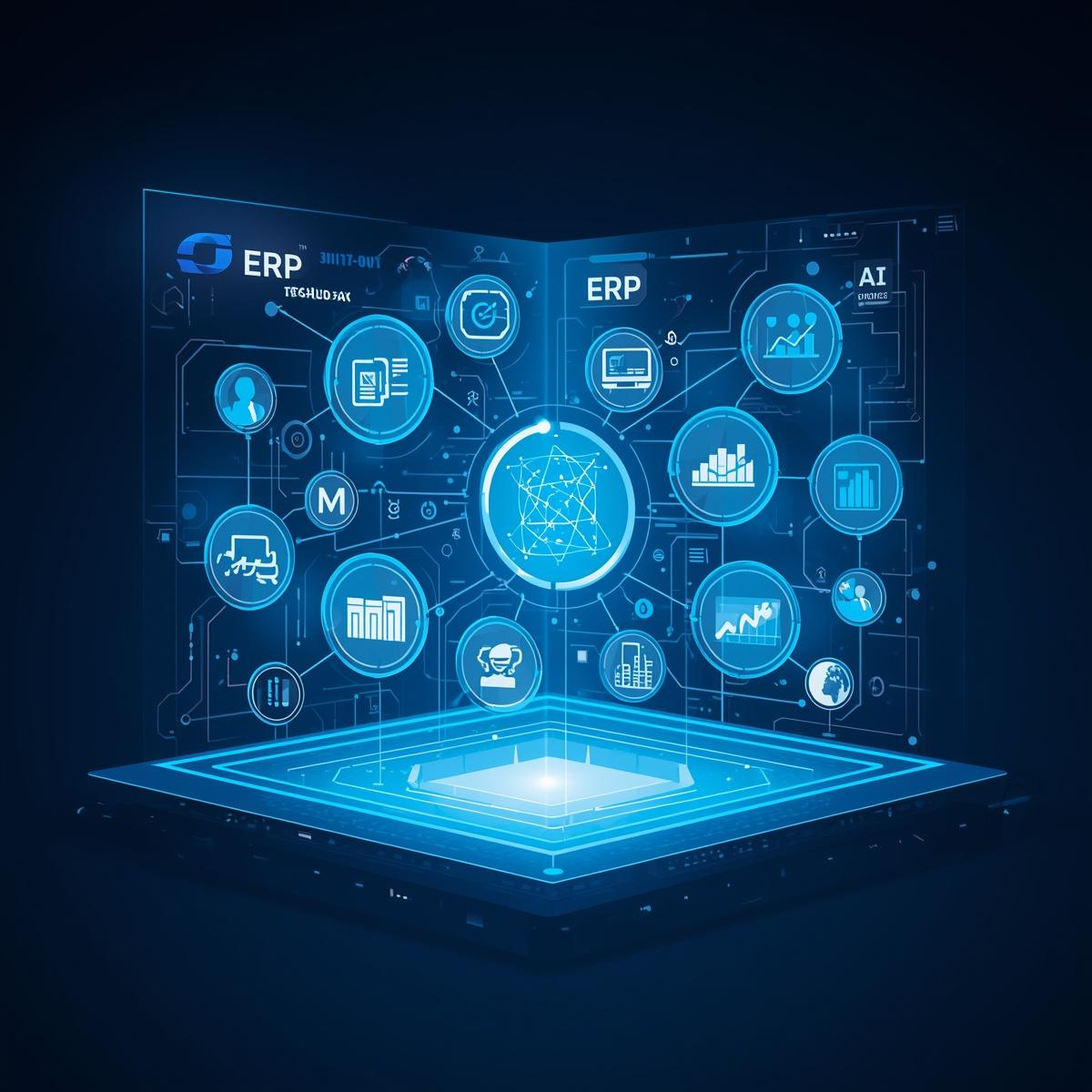
Enterprise Resource Planning (ERP) systems have long been the backbone of business operations, handling finance, supply chain, HR, procurement and manufacturing. But in 2026 and beyond, ERP is undergoing its most significant transformation since the move to the cloud. What was once a system of record is rapidly becoming a system of intelligence and execution.
Driven by AI, automation, composability and real-time data, the next generation of ERP platforms will not just report on the business – they will actively run it.
From Transactional Systems to Autonomous Operations
Traditional ERP systems focused on recording transactions: invoices, purchase orders, payroll and inventory movements. Modern ERP platforms are now embedding AI-driven decision engines that analyse data continuously and take action automatically.
Examples include:
- Predicting cash-flow shortfalls and adjusting payment schedules automatically
- Reordering inventory based on demand signals rather than fixed thresholds
- Identifying financial anomalies in real time, not during month-end close
- Automating intercompany reconciliation without manual intervention
In the future, ERP will move beyond dashboards and alerts – it will orchestrate entire business workflows autonomously, with humans acting as supervisors rather than operators.
Composable ERP Becomes the New Standard
One of the biggest breakthroughs in ERP architecture is the move away from monolithic platforms toward composable ERP. Instead of a single, rigid system, organisations can assemble ERP capabilities from modular services: finance, HR, supply chain, manufacturing, analytics and compliance.
This allows businesses to:
- Replace or upgrade modules without full system migrations
- Integrate best-of-breed tools more easily
- Scale ERP functionality as the business grows
- Reduce vendor lock-in
Composable ERP aligns with how modern businesses operate – agile, distributed and continuously evolving.
Real-Time ERP Replaces Periodic Reporting
Another major shift is the move from batch-based processing to real-time ERP. Legacy systems rely on nightly jobs, month-end closes and periodic reconciliations. Future ERP platforms operate on live data streams.
This enables:
- Continuous financial close
- Live margin and profitability tracking
- Real-time supply-chain visibility
- Instant compliance monitoring
For CFOs and operations leaders, this means decisions are made based on what’s happening now, not what happened weeks ago.
AI-Native ERP Changes the Role of Finance and Operations
AI will fundamentally change how people interact with ERP systems. Instead of navigating complex menus and reports, users will interact using natural language and intelligent assistants.
Imagine asking:
- “What’s driving the drop in margins this quarter?”
- “What happens to cash flow if we delay vendor payments by 10 days?”
- “Which suppliers pose the highest risk next month?”
The ERP system won’t just answer – it will simulate outcomes, recommend actions and execute approved changes.
This shifts ERP from a back-office system into a strategic decision platform.
Embedded Security and Compliance by Design
As ERP systems increasingly host sensitive financial, employee and operational data, security is becoming inseparable from ERP design.
Future ERP platforms will include:
- Built-in identity and access governance
- Continuous compliance monitoring
- Automated audit trails
- AI-driven fraud detection
- Secure integrations with backup and cyber-resilience platforms
This reduces risk while simplifying regulatory compliance — a growing concern for boards and finance leaders.
ERP Extends Beyond the Enterprise
ERP is no longer confined to internal users. Next-generation platforms will connect directly with:
- Customers
- Suppliers
- Logistics providers
- Financial institutions
- Regulatory systems
APIs and integration layers will turn ERP into the central nervous system of the business ecosystem, enabling seamless collaboration across value chains.
What This Means for Businesses
The future of ERP is not about replacing old systems — it’s about redefining how businesses operate. Organisations that modernise early will benefit from:
- Faster decision-making
- Lower operational costs
- Improved resilience
- Greater agility
- Stronger competitive advantage
Those that delay risk being constrained by rigid systems that cannot keep pace with change.